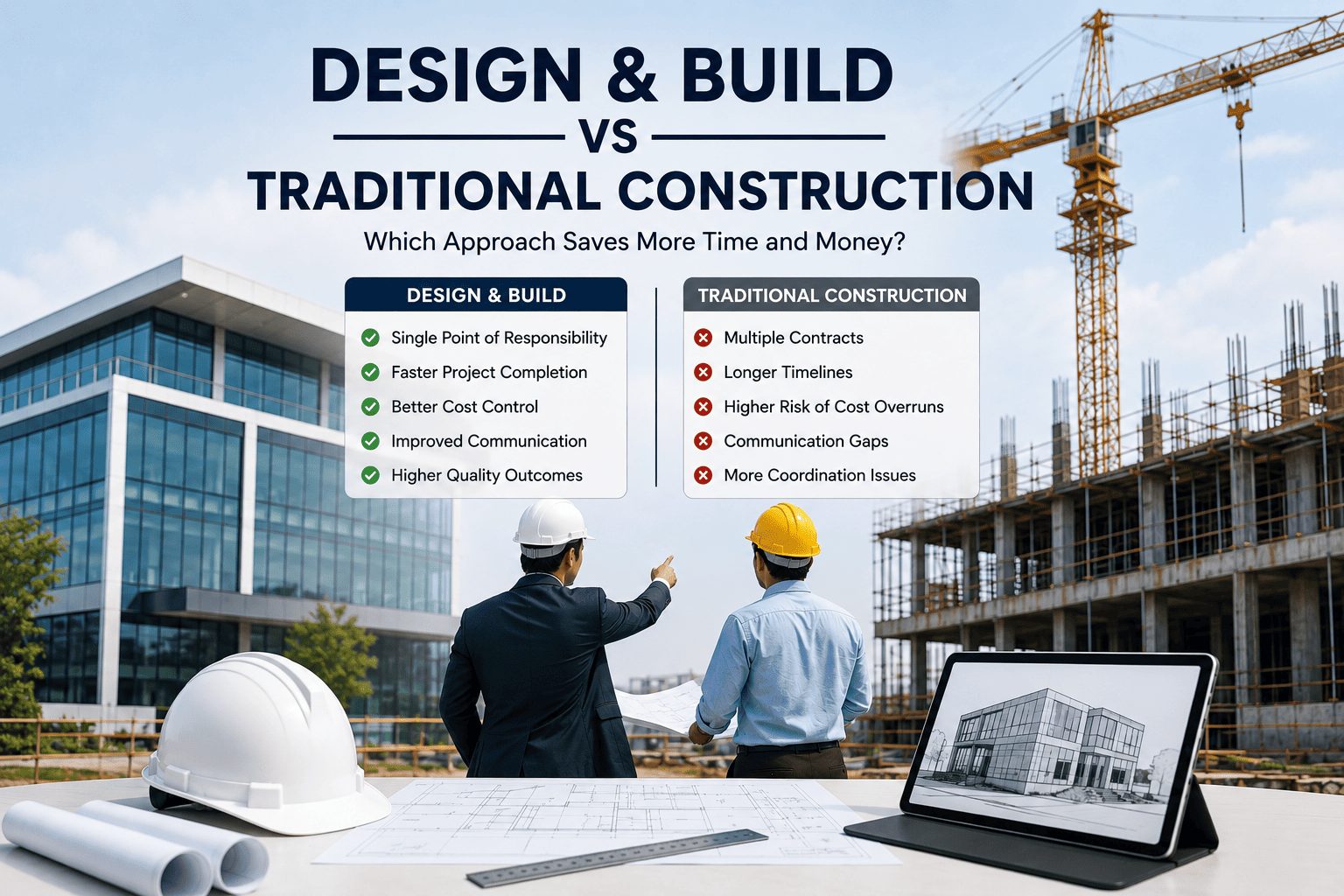
Design & Build vs Traditional Construction: Which Approach Saves More Time and Money?
Every successful construction project begins with one important decision—choosing the right project delivery method. Whether you are planning a residential villa, commercial office, industrial facility, retail showroom, or institutional building, the execution strategy you select will directly impact your project's timeline, quality, budget, and overall experience.
Traditionally, construction projects involved multiple independent consultants, architects, engineers, and contractors. While this process has worked for decades, modern construction demands faster execution, better collaboration, and greater accountability. This is where the Design & Build approach has become increasingly popular.
Instead of hiring different agencies for design and construction, Design & Build combines every stage of the project under one experienced team, making the entire process more efficient and transparent.
Understanding Traditional Construction
Traditional construction follows a sequential process where different professionals are appointed separately for each phase of the project.
Typical Process
- Hire an Architect
- Prepare Building Designs
- Obtain Structural & MEP Designs
- Complete Government Approvals
- Select a Contractor
- Begin Construction
- Coordinate Between Multiple Vendors
Although this model provides flexibility in selecting different consultants, it often creates communication gaps between the designer and contractor, resulting in delays, change orders, and increased costs.
What is Design & Build?
Design & Build is an integrated construction approach where one organization manages the entire project—from concept and planning to construction and final handover.
Instead of coordinating several companies, clients work with a single project team responsible for every stage.
Services Typically Included
- Concept Planning
- Architectural Design
- Structural Engineering
- MEP Design
- Project Estimation
- Procurement
- Construction Execution
- Quality Control
- Project Management
- Final Handover
Major Differences Between Both Approaches
| Design & Build | Traditional Construction |
|---|---|
| Single contract | Multiple contracts |
| Single point of responsibility | Several agencies involved |
| Better communication | Coordination challenges |
| Shorter project timeline | Longer execution period |
| Improved budget control | Higher risk of cost variations |
| Integrated planning | Independent planning process |
| Better accountability | Shared responsibility |
Advantages of Design & Build
1. Faster Project Completion
Since designers and construction teams work together from the beginning, several activities can happen simultaneously. This reduces waiting periods and accelerates project delivery.
2. Better Budget Management
Early coordination allows construction costs to be estimated accurately during the design stage, reducing unexpected expenses later.
3. Better Communication
With one dedicated team managing the project, communication becomes more organized, reducing misunderstandings between stakeholders.
4. Higher Construction Quality
Integrated planning ensures that design decisions are practical and aligned with construction methods, improving overall workmanship.
5. Reduced Risk
Since one company is responsible for both design and execution, accountability becomes clear, reducing disputes and project risks.
When Traditional Construction May Be Suitable
Traditional construction may still be appropriate for projects where:
- The client already has a completed architectural design.
- Different consultants are preferred for specialized services.
- Construction will be executed in multiple independent phases.
- The project requires separate tendering for contractors.
When Design & Build is the Better Choice
The Design & Build model is especially beneficial for:
- Residential Homes
- Luxury Villas
- Commercial Buildings
- Corporate Offices
- Industrial Facilities
- Retail Stores
- Hospitals
- Educational Institutions
- Warehouses
- Interior Fit-Out Projects
How Design & Build Helps Control Costs
One of the biggest reasons projects exceed their budgets is poor coordination between design and construction teams. Design modifications after construction begins often lead to material wastage, labour delays, and additional expenses.
With Design & Build, planning is completed with construction feasibility in mind, allowing better procurement planning and more accurate budgeting.
Project Timeline Benefits
Traditional projects usually complete one phase before another begins.
Design & Build allows overlapping activities, meaning procurement, engineering coordination, and construction preparation can begin while final design work continues.
This integrated workflow significantly shortens the overall project duration.
Choosing the Right Construction Partner
Regardless of the project delivery method, selecting an experienced construction company remains one of the most important decisions.
Look for a partner who offers:
- Experienced Engineering Team
- Professional Project Management
- Transparent Cost Estimates
- Quality Assurance Process
- Safety Standards
- Timely Project Delivery
- Clear Communication
- After-Completion Support
Final Thoughts
Every construction project represents a significant investment, making careful planning essential. While traditional construction remains suitable for certain projects, the Design & Build approach offers better collaboration, improved efficiency, stronger accountability, and greater cost control.
By working with an experienced Design & Build partner, clients can simplify the construction journey while ensuring quality, transparency, and timely project completion from concept to handover.
Frequently Asked Questions (FAQs)
What is the main difference between Design & Build and Traditional Construction?
Design & Build combines design and construction under one contract, while Traditional Construction involves separate consultants and contractors.
Does Design & Build reduce construction costs?
Yes. Better planning, integrated coordination, and reduced design changes help control overall project costs.
Which method is faster?
Design & Build generally delivers projects faster because design and construction teams collaborate throughout the project lifecycle.
Is Design & Build suitable for commercial projects?
Absolutely. It is widely used for commercial, industrial, institutional, and residential developments where efficient project management is essential.
Why do many modern construction companies prefer Design & Build?
It improves communication, reduces delays, minimizes project risks, and provides clients with a single point of responsibility from planning to completion.